Dog Health > Joint Care
If Your Dog Has Started Slowing Down, Read This Before You Blame Old Age: 5 Things Most Owners Only Learn When It's Too Late

By David H., Leeds. Owner of Alfie, a 9-year-old Labrador
4 October 2026
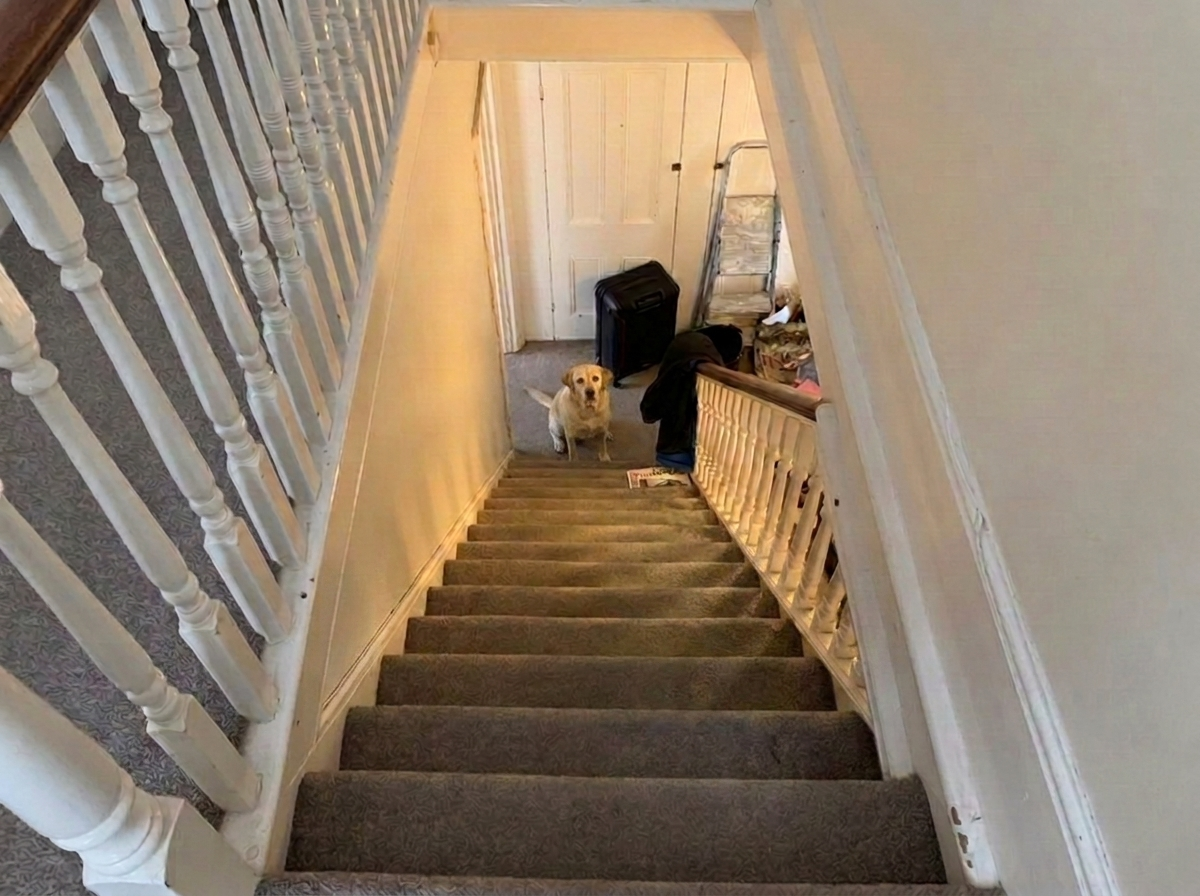
I used to think slowing down was just what dogs did.
Alfie stopped chasing the ball at the park. He'd watch it go, then look at me like we'd agreed not to bother anymore. He stopped following me upstairs at night. The mad sprint to the front door became a trot, and then a walk.
Everyone said the same thing. He's nine, David. He's an old man now.
My wife said it. The kids said it. I said it, probably a hundred times, and every time I said it I believed it a little more.
That sentence nearly cost my dog his best years. Here are the five things I wish someone had put in front of me two years earlier.
Reason 1:"Slowing down" usually isn't age. It's soreness. And soreness can change.
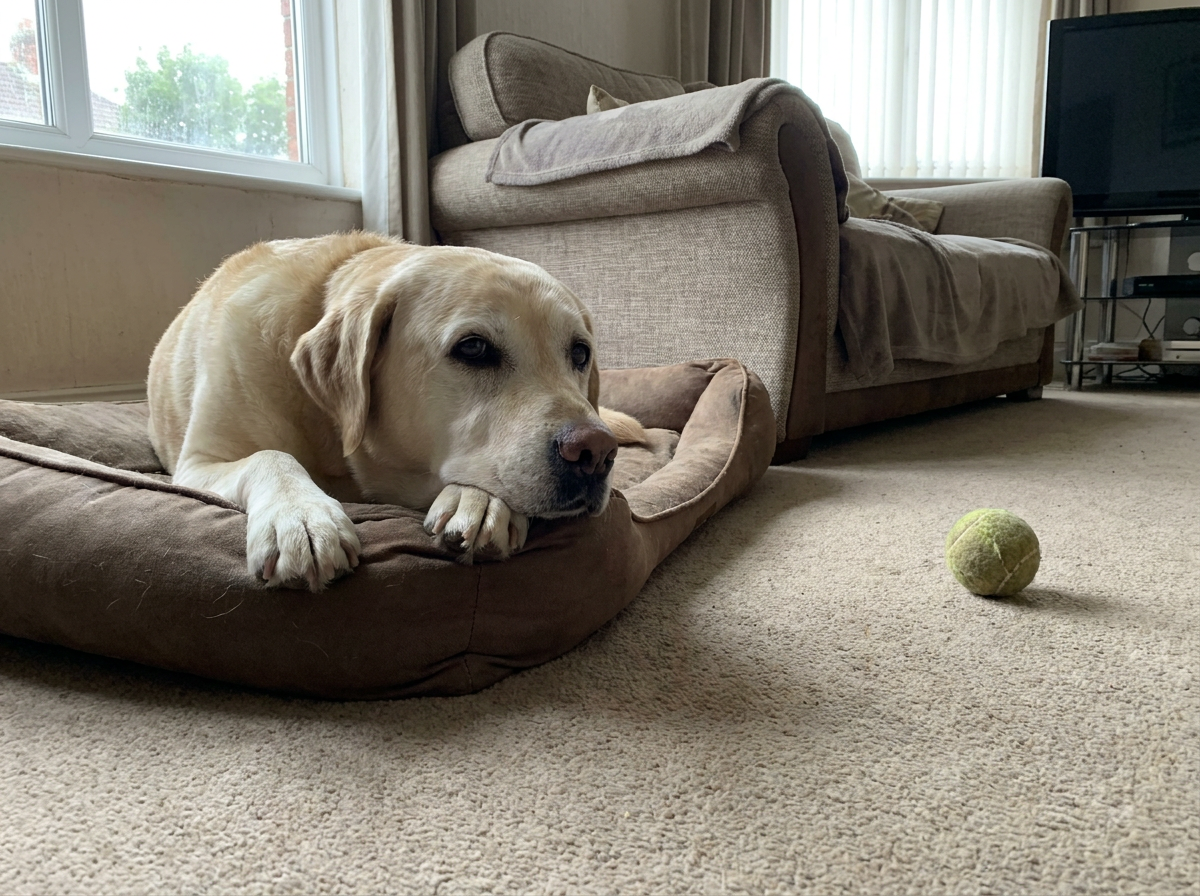
Age itself doesn't make a dog stop jumping on the sofa. Age doesn't make a dog hesitate at the bottom of the stairs.
What actually happens is quieter than that. Over 80% of dogs past age five already show early signs of stiffness, and most owners never notice, because dogs are wired to hide soreness. The joints change long before anything looks dramatic, and the dog does what dogs always do: he adapts without complaining. He doesn't limp. He just quietly stops doing the things that don't feel good anymore.
We read that as personality. "He's mellowed." "He's a lazy old boy now."
He hasn't mellowed. He's managing.
And that distinction matters enormously, because old age is something you accept. Soreness is something you can actually do something about.
Reason 2:If you've already tried a joint supplement and saw nothing, this is why.
This is the part that made everything click for me.
Most joint supplements aren't fake. They're incomplete.
Walk into any pet shop and the joint chews on the shelf are built around one ingredient: glucosamine. Glucosamine does one job. It feeds the cushion in the joint. That's a real job, and it's worth doing.
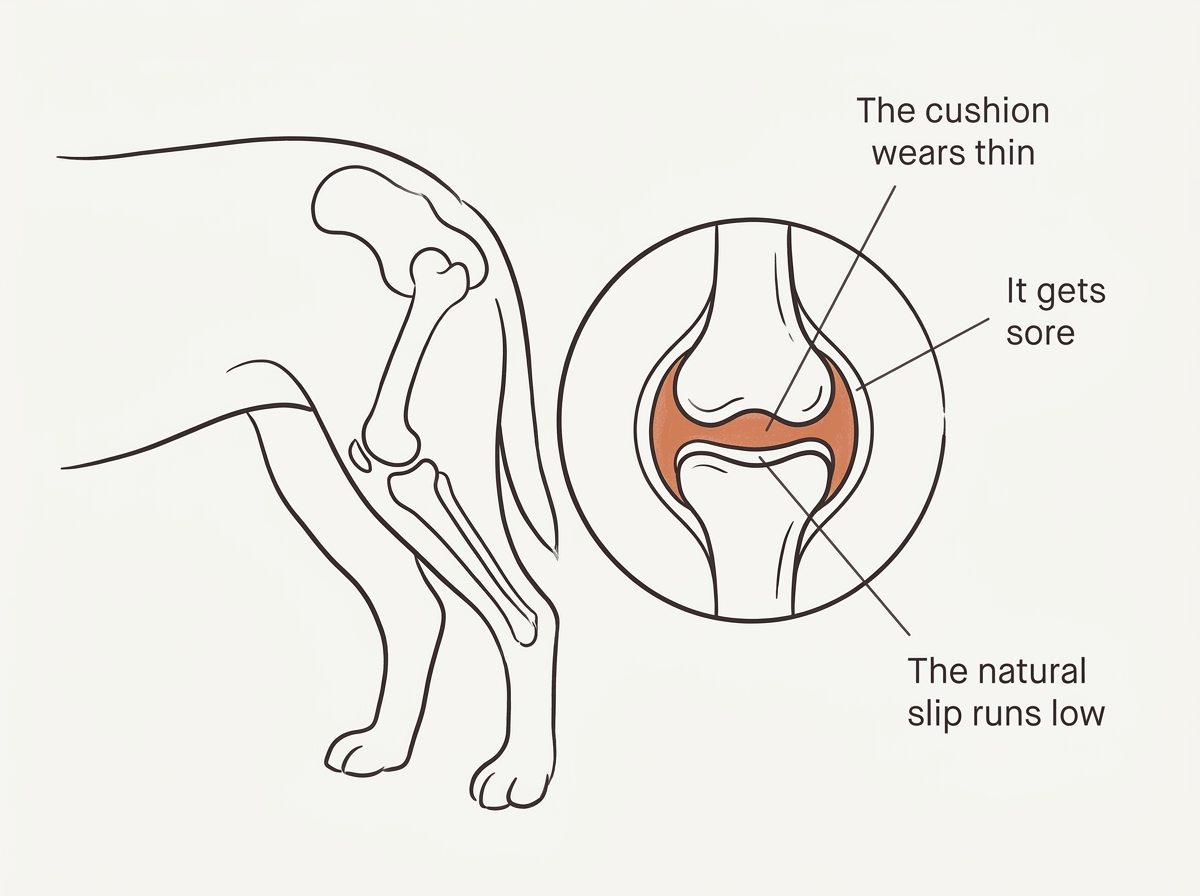
The problem is that a stiff, sore joint has three things going on, not one:
- The cushion between the bones wears thin
- The joint gets sore and irritated
- The natural slip that lets it glide runs low
A glucosamine-only chew works on the first problem and leaves the other two completely untouched. Which is exactly why so many owners say the same sentence: "We tried a joint supplement and honestly didn't notice anything."
You didn't fail. The supplement wasn't finished.
Reason 3:The chew we switched to does all three jobs at once. It's the only one we found that does.
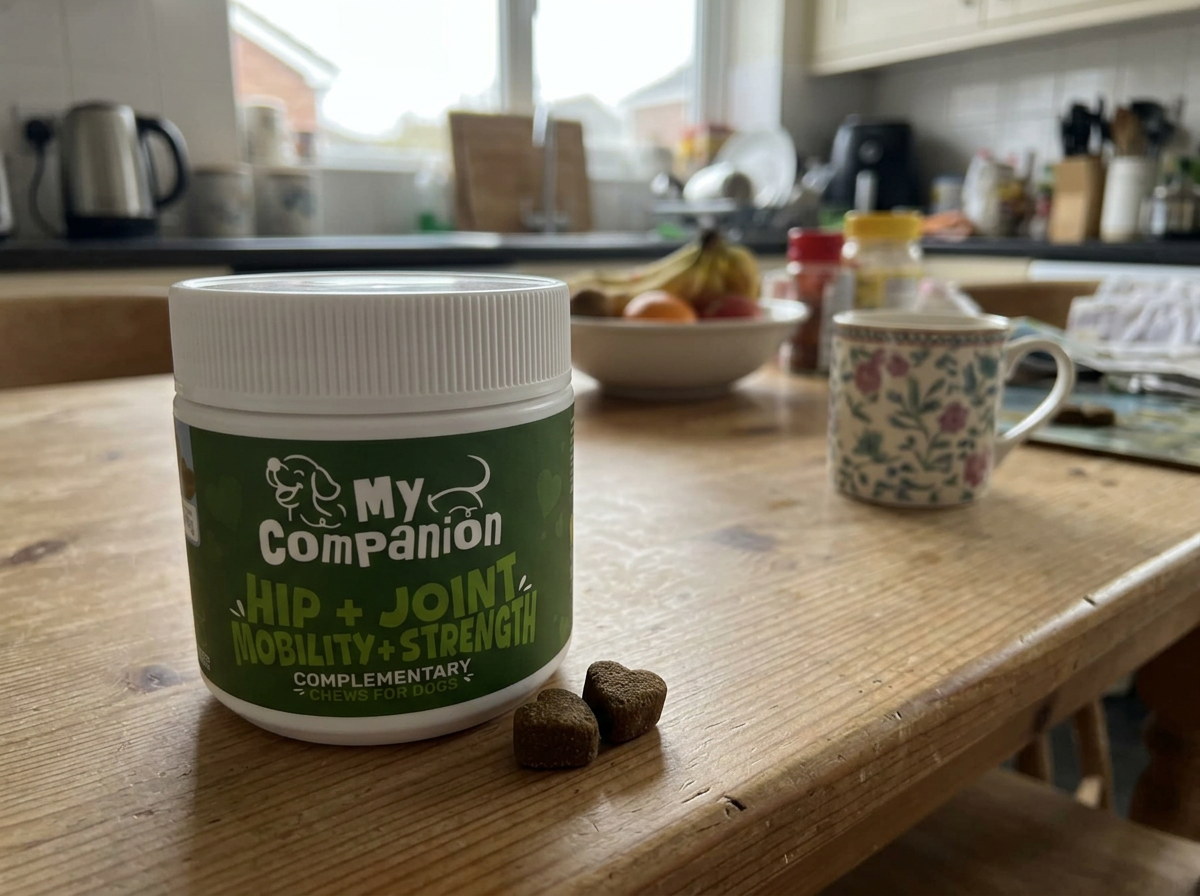
After months of reading, I found MyCompanion's Hip and Joint Chews, a small UK brand that built their formula around exactly this problem. They call it the Tri-Glide Complex, and it's the only formula I came across designed to cover all three jobs in one daily chew:
- Cushion. Feeds the natural padding between the bones, the part glucosamine-only chews stop at.
- Calm. Helps the joint stay comfortable through daily wear, so your dog isn't quietly working around soreness all day.
- Glide. Supports the joint's natural slip, the bit that lets everything move smoothly instead of grinding through every step.
Every ingredient inside those three jobs is research validated, and there's no filler doing nothing. No grains, maize or soya. No artificial colours or flavours. Batch tested, sold direct only. It's chicken flavoured and shaped like a treat, so there's no daily pill fight. Alfie thinks it's a reward. It took me longer to understand the label than it takes to feed him one.
Reason 4:What comes back isn't just the movement. It's the dog.
Here's the honest bit, because I promised myself I'd write this the way I'd want to read it.
Week one and two, I saw nothing. I nearly stopped. Nobody tells you that the first weeks are quiet, so you assume it isn't working. It's normal. Keep going.
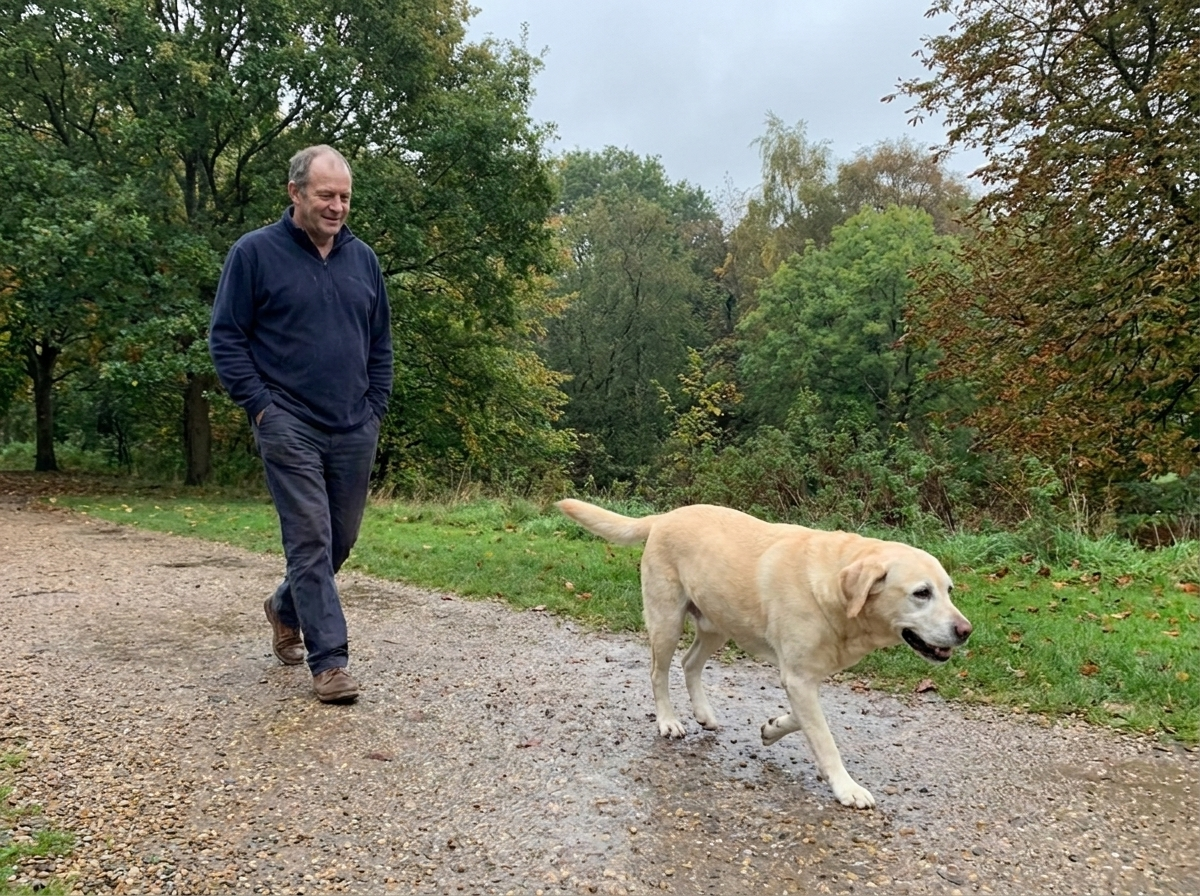
Around week three and four came the small things. He came upstairs one night like it was nothing. At the park, he went after the ball. Not far, but he went.
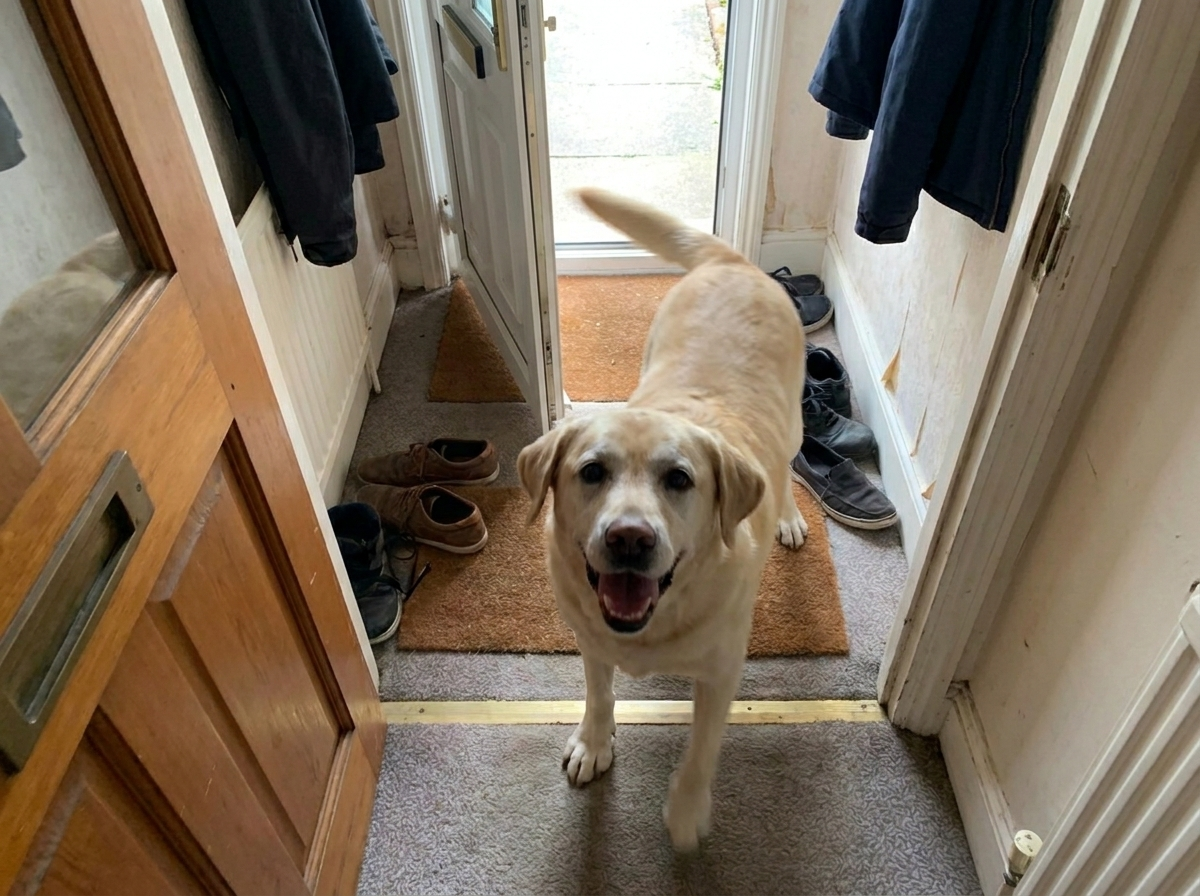
By week six to eight, the thing I hadn't even realised was missing came back: his personality. The door greeting. The nose under my elbow at my desk. The pestering.
That's the part no label prepares you for. You think you're buying something for his joints. What you actually get back is your dog acting like your dog again.
Reason 5:Other owners saw the same thing. And you don't risk a penny finding out.
I'm not the only one. These are real reviews from other UK owners:
"Dog loves them helps with joints my collie is 7 and was stiff she can now run around hopefully pain free."
"Seems to help senior dogs joints."
"Fab product. I buy and buy and buy. My disabled dog has come on wonderful. Yu***e did nothing for her and so expensive. This product is truly amazing. My Nala is a different dog."
And MyCompanion backs every tub with a 90 day guarantee, judged by your own dog: the getting up, the walks, the stairs. No difference after 90 days, every penny back.
Which means the real question isn't whether the chews work. It's whether "he's just getting old" is a story you're willing to keep telling yourself without checking.
I'm glad I checked.
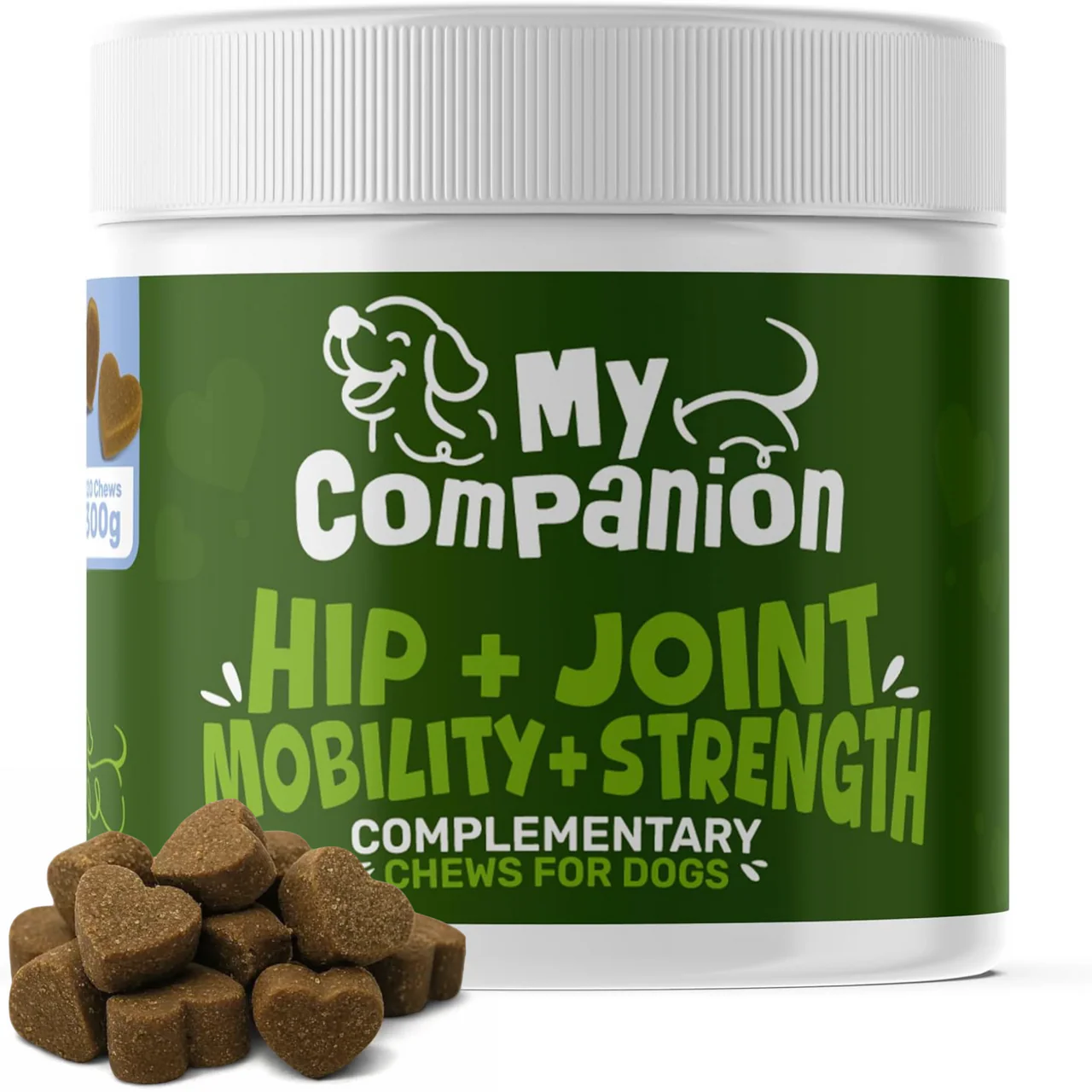
MyCompanion Hip and Joint Chews
The only UK chew built on the Tri-Glide Complex: Cushion, Calm, Glide.
- 120 chews per tub
- Chicken flavoured, dogs take it like a treat
- No grains, maize or soya. No artificial colours or flavours
- 90 day guarantee, every penny back
★★★★★ 4.8/5 Rated by 1,204 Dog Owners
FAQ
Your dog can't tell you he's sore. He can only show you, by slowly giving things up.
Don't wait for the limp.